Every once in a while you find yourself caught between two warring bureaucratic processes. This was me back in 2024, while I was trying to finalize my immigration paperwork. I was missing a key document that only Cook County (the Chicago district I lived in at the time) could provide. The only problem was that their standard document format didn’t satisfy USCIS’s specific requirements, and I was quickly running out of time.
As a self-proclaimed bureaucratic masochist, I was uniquely qualified for the task. Though it didn’t make it any less daunting. Not all of it was hard, though. The status checking was easy to hand off. I built a tiny cron job that hit the USCIS case status page daily and notified me if there were any changes to my case.
Working with the clerk’s office, however, was largely manual, and there was no magic script that would’ve fixed it. I called the same number every other day like clockwork for weeks. Until finally, on yet another Tuesday afternoon as I braced myself for disappointment, I got connected to a clerk who was willing to dig past standard procedure and identify (and fix) the filing error that had stalled the process for months. Thanks to her, I had the paperwork I needed and managed to file in time.
Having dealt with boatloads of paperwork in my life (a story for another post), making the distinction between what could be automated vs what had to be manual was obvious to me. Both were necessary steps toward the same goal of getting information out of a bureaucratic process. But they served different purposes.
In the age of AI, a cron job is light work. Now, we talk of sinking claws into tasks that previously demanded manual intervention. We scoff at the thought of someone using an agent to run basic mental sums or make a quick phone call to change an address. But I too have caught myself, on many an occasion, burning tokens on a mundane task that would’ve taken me a few minutes to do myself.
I’m not sure I could tell you with clarity what the line to draw is between delegation and just doing it yourself. I certainly don’t always get this right. I even made a website (shouldiuseagents.com) as a joke about how arbitrary my decision making for that can be. What I do know is that the best outcomes I’ve had from agentic workflows came from correctly outlining the difference.
I frequently think about my experience with the clerk’s office. The goal there was never to automate the entire process away. Instead, it was to remove as much friction as possible so I could focus on the important bits; which ended up being about building enough of a relationship (however initially adversarial) with the clerk’s office for someone to finally agree to help and advocate for me. I never learned the real reason she decided to help me that Tuesday afternoon. But I was grateful regardless. (see below for the very satisfying final email exchange)
Maybe that’s what a good use of AI looks like. Not replacing the human effort entirely but being able to discern which parts of the problem are worth delegating and which ones still deserve our attention.
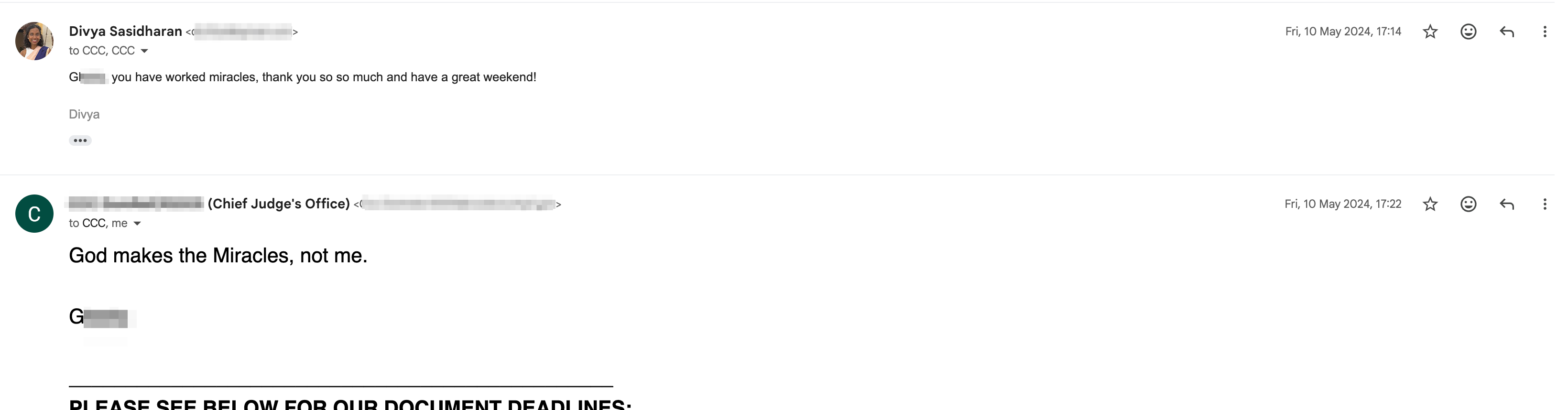
The very satisfying final email exchange.